On 24 July 2020, a large Nintendo archive was uploaded online and quickly became known as the Gigaleak.
It was not one single neat source drop.
It was a mixed archive of ROMs, source trees, boot ROM repositories, internal tools, and later CVS/Subversion backups.
These were the archive files uploaded on 4chan /g/ on 24 July 2020, the day the Gigaleak was leaked:
This page will cover each of these files, linking out to specific posts for each to dive into the details.
The next day its sequel, often called Gigaleak 2, followed with much more Nintendo 64 material.
The archive mysteriously named other.7z is one of the most interesting parts of the leak because it mixes game source trees with internal repositories and support material.
It contains these major sub-archives:
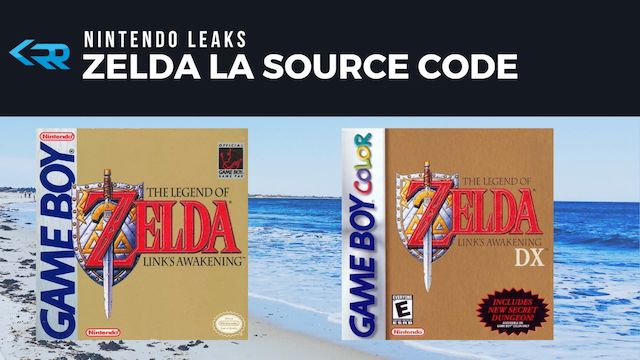
The archive dmg.7z contains the source code for the original version of The Legend of Zelda Links Awakening.
The archive CGB.7z contains the source code for the Game Boy Color game The Legend of Zelda Links Awakening DX and pre-build ROM images of Hamtaro 2.
We have a post covering the Full set of official JP/USA Famicom/NES ROMS released in the Famicom_NES.7z archive along with other LotCheck releases:
Contains the uncompiled raw source code for a number of Super Famicom (SNES) titles. In the leak, this codebase is preserved both as the SFC.7z archive and as a fully unzipped other/SFC/ソースデータ (Source Data) working directory.
We have dedicated deep-dives exploring the leaked source code and assets for each of these massive titles:
One small provenance detail is easy to miss here.
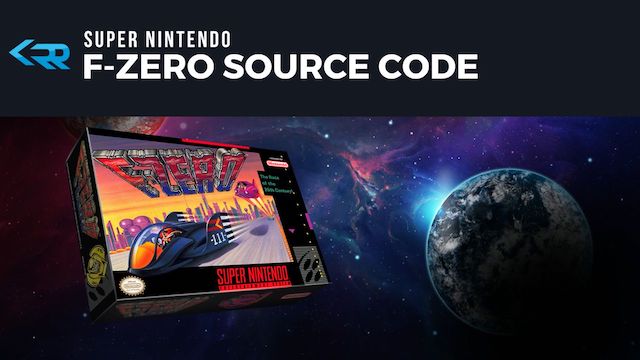
While the primary unzipped source directories live under other/SFC/ソースデータ, three of these source trees—F-Zero, Star Fox 2, and Super Mario Collection (srd13-SFCマリオコレクション)—also survive duplicated inside other/NEWS.
So far this NEWS material looks identical to the other/SFC/ソースデータ/ versions rather than a different branch, but it is still useful because it shows these exact snapshots were also present concurrently in a Sony NEWS-side working environment.
The NEWS.7z archive is smaller and messier than SFC.7z, but it still preserves some useful workstation-side context.
As mentioned above, the F-Zero, Star Fox 2, and Super Mario Collection source trees also appear again here as exact copies, confirming they shared the same workstation environment snapshot.
Inside other/NEWS/FZERO, the Game and Tools folders reappear, and the folder is even duplicated as other/NEWS/FZERO/FZERO. That does not currently seem to add any new F-Zero content, but serves as an additional preserved copy of the same archive.
Beyond the source trees, the NEWS.7z archive also contains a テープリストア (tape-restore) directory holding seven workstation backup snapshots in .tar format, plus a manifest file. These appear to be uncompressed mid-development system backups from around 2014:
| Archive | Size | Entries | Contents |
|---|---|---|---|
| NEWS_02.tar | 12M | 187 | System logs and user configs (.net, .cshrc, .login, .logout, mail profiles) and some compressed ROMs inside emails |
| NEWS_04.tar | 96M | 5,309 | Mixed graphics workstation: 2,297 .BAK, 991 .SCR, 876 .CGX, 431 .COL, 266 .OBJ, 108 .MAP; includes late Star Fox 2 art, Zelda/GB-Zelda branches, confirmed Super Mario Kart assets, and a likely Pilotwings-era prototype |
| NEWS_05.tar | 109M | 3,831 | Star Fox 2 3D CAD Pipeline & Development Toolkit: 628 .txt, 500 .cad 3D models, 371 .anm animations, 307 .nca Nintendo CAD files, 268 .c C source files |
| NEWS_09.tar | 34M | 1,374 | SNES sprite/level assets: 502 .BAK backups, 213 .CGX, 128 .COL, 117 .OBJ, 56 .SCR, 52 .PNL panels - Yoshi-related content |
| NEWS_11.tar | 127M | 5,401 | Largest dump: 921 .CGX, 709 .OBJ, 648 .SCR, 526 .COL, 391 .BAK, 336 .cgx - primarily Yoshi’s Island production artwork and sprite objects |
| NEWS_17.tar | 4.0K | 2 | Stub: Backup.info only |
| NEWS_41.tar | 4.0K | 2 | Stub: Backup.info only |
These tars represent raw workstation snapshots rather than organized source archives. The bulk of the data (NEWS_04, NEWS_05, NEWS_09, NEWS_11) consists of SNES development assets - heavily weighted toward graphics files (.CGX/.COL color palettes and screens), object definitions (.OBJ/.OBZ 3D/sprite data), and map data (.MAP and .SCR). Notably, NEWS_05 also preserves CAD files and animation source, suggesting multi-disciplinary workstation backups captured during active development cycles.
NEWS_02.tar is mostly system/user environment data, but it also preserves email payloads with attached ROM files.
For extracting those attachments, use this NEWS_02 email extraction script.
Make sure to use the correct key for each email and put them in quotes e.g:
## eng/Mail/inbox
python3 decode.py -i '/usr01/eng/Mail/inbox/1' -k 'nishi\0' # sromchk.lzh - SROMCHK.EXE (ROM CHECKER for SHVC/SNES  Version 0.02)
python3 decode.py -i '/usr01/eng/Mail/inbox/2' -k 'is\0' # SNES Audio/Music Tooling from 12th March 1993 (containing SGE.ENV SGE.EXE SGE.OVR SME.EXE SME.OVR SWM.EXE SWM.OVR)
python3 decode.py -i '/usr01/eng/Mail/inbox/3' -k 'isw\0' # 15th March 1993 isw.lzh - Only ISW.COM and ISW.EXE
python3 decode.py -i '/usr01/eng/Mail/inbox/4' -k 'is\0'  # SNES SDK Binaries from March 1993 - ISASMN.lzh (IS65.EXE, ISLINK.EXE, ISSND.EXE), ISW0318.LZH (ISW.COM, ISWASM.BAT, ISWREQ.COM, TEST2.X65 ISW.EXE, ISWEDIT.BAT TEST1.X65, TEST3.X65)
python3 decode.py -i '/usr01/eng/Mail/inbox/5' -k 'newscad\0' # mario-4.lzh (containing CHIJO.COL, M-POSE.CGX, M-POSE.OBJ, RUN.OBJ, YOSHI.CGX, YOSHI.OBJ)

## Nintendo of America (NOA)
python3 decode.py -i '/usr01/noa/Mail/inbox/1' -k 'angry\0' # neskr.lzh containing PRG.ROM from 11th March 1993
python3 decode.py -i '/usr01/noa/Mail/inbox/#2' -k 'antepaenultima\0' # mar19th.lzh containing DMGJCX00.PRG

##  Research and Development 1 (RD1)
python3 decode.py -i '/usr01/rd1/Mail/inbox/1' -k 'izushi\0' # MINES.LZH - Containing Windows Minesweeper

python3 decode.py -i '/usr01/uji/Mail/inbox/#1' -k 'pmdawn\0' # The Great Waldo Search (SGW05) and Bubsy (SUY02)
python3 decode.py -i '/usr01/uji/Mail/inbox/1' -k 'sickboy\0' # Wayne's World (SWW07-0.COM and SWW07-1.COM) from Feb 17th
python3 decode.py -i '/usr01/uji/Mail/inbox/2' -k 'starwing\0' # SFRG-FO - German Star Fox
python3 decode.py -i '/usr01/uji/Mail/inbox/3' -k 'toomanygames\0' # 5 games (NHI02, NU803, SHX01, SMU00, STX02)
The recovered ROM groups include the following 1:
NHI02 (single file) and NU803 (split) - do not currently load in bsnes; from size these are likely NES-side buildsSHX01 (split) - Super High ImpactSMU00 (split) - Mario is MissingSTX02 (split) - TAZ-MANIASGW05 - The Great Waldo SearchSUY02 (split) - first BubsyNEWS_04.tar is a 96 MB Nintendo backup from one of their Sony NEWS workstations that preserves a large amount of graphics-side production material rather than source code.
Where NEWS_05 captures the Star Fox 2 3D toolchain, NEWS_04 captures the more traditional 2D side of console production: character banks, palettes, screen layouts, object definitions, maps, and a huge number of backup revisions.
The archive is especially useful because it is not a clean, single-project handoff. It is a live multi-user workstation snapshot with three home directories, several different projects, and visible evidence of iterative art work.
NEWS_04 is best understood as a mixed graphics workstation backup.
It preserves:
arimoto (Masanao Arimoto), sugiyama (Tadashi Sugiyama), and kakui.BAK files, showing heavy iteration and local backup habits.SCR files, making screen and scene layout one of the dominant data types.CGX files and 431 .COL files, pointing to SNES/GB graphics-bank and palette work.OBJ files and 108 .MAP files, showing object/layout and map-side asset organizationhome/arimoto/SF2home/arimoto/zelda and home/arimoto/GB-zeldahome/sugiyama with fly, flyman, CAR, SIM, MARIO, and FX2Unlike NEWS_05, this archive contains almost no conventional program source.
Its value comes from file naming, layout formats, revision backups, and the way several projects coexist on one machine.
Arimoto’s home directory is the most important part of the archive.
It combines one late and unusually dense SF2 workspace with several older Zelda-related branches.
| Project | Files | Dominant types | Date range | Reading |
|---|---|---|---|---|
SF2 |
1236 |
.BAK, .CGX, .SCR, .COL, .OBJ, .OBX |
1993-07-01 to 1995-09-19 |
The late, most active branch and the real centerpiece of NEWS_04 |
GB-zelda |
824 |
.BAK, .OBJ, .CGX, .MAP, .SCR, .PNL |
1991-11-27 to 1994-08-02 |
Game Boy Zelda visual and layout work, with stronger map/object emphasis |
zelda |
545 |
.BAK, .CGX, .SCR, .COL, .MAP, .PNL |
1991-05-23 to 1994-07-25 |
Earlier Zelda screen/map art branch |
DELDA |
213 |
.BAK, .CGX, .SCR, .COL |
1991-05-23 to 1991-10-24 |
Small early Zelda-related branch or internal variant |
Sugiyama’s home is the second major component of NEWS_04.
It is older than Arimoto’s, broader in scope, and reads like a workstation that served multiple productions over five years rather than one focused project.
| Project | Files | Dominant types | Date range | Likely game |
|---|---|---|---|---|
flyman |
429 |
SCR 286, BAK 139 |
1989-10-13 → 1991-05-07 |
Pilotwings-era prototype (unconfirmed) |
fly |
388 |
BAK 137, CGX 102, SCR 78, COL 69 |
1989-10-13 → 1994-03-18 |
Pilotwings-era prototype (art side; 1994 date = tape restore) |
CAR |
415 |
BAK 198, SCR 148, CGX 38, MD7 3 |
1991-04-05 → 1994-03-18 |
Super Mario Kart ✓ |
SIM |
85 top-level + is/ |
SCR, CGX, OBJ, SFX, BAK | 1990-11-27 → 1993-01-22 |
SimCity SNES (probable) |
MARIO |
77 |
CGX, SCR, COL, BAK | 1993-04-08 → 1993-06-21 |
Super Mario Collection front-end/menu branch (probable) |
FX2 |
41 |
CGX, SCR, COL, BAK | 1993-07-06 → 1993-12-08 |
Wild Trax / Stunt Race FX ✓ |
One useful thing about Sugiyama’s home is that the project folders are not the whole story.
The root of home/sugiyama also preserves the shared workstation and CAD-tool layer that sat above those game directories.
The loose files split into a few clear groups:
.cshrc, .login, .profile, .Xdefaults, .sxsession, and sj2usr.dicX.CGX, X.SCR, X0.SCR to X3.SCR, 256.CGX, PATTERN.SCR, and cad.CGXsfx_main sample manifests like SAMPLE.sfx_main.LST, run.sfx_main.LST, and their matching .DAT files.cbm files named after editor actions such as pencil, paint, line, circle, zoom, rotation, priority, map-open, scr-open, and chr-openThose .cbm files are especially useful.
There are 31 of them, every one is exactly 206 bytes, and the names read like UI commands rather than game data.
The safest interpretation is that they are compact command or button definitions for Nintendo’s SNES graphics tools, not per-game assets.
The sfx_main files point in the same direction.
Their .LST contents reference paths like /usr/local/srd/cad/sfc/sfx_main.hex, which makes the root of Sugiyama’s home look like a real SRD CAD workstation environment rather than just a pile of extracted game folders.
fly and flyman are complementary art/layout directories for an early SNES flight-game branch, likely connected to a Pilotwings-era prototype path.
CAR preserves unambiguous Super Mario Kart production assets (MARIO-CAR, JUGEM, DOKAN, POLE, SLOT) and Mode 7 track-map work.
SIM preserves SimCity SNES menu/UI structures (SELECT-SCENARIO, MAP-SELECT, TOWN, LEVEL, INPUT) and a distinctive .SFX pairing workflow tied to an S-CG-CAD tool signature.
One important extra detail at the NEWS_04 level is that Sugiyama’s root directory also preserves shared CAD-tool resources above the project folders themselves, including generic sample screens, sfx_main manifests, and thirty-one tiny .cbm files that look like editor command or button definitions for Nintendo’s graphics tools.
MARIO is a short, menu-heavy branch centered on GAMESELECT.*, MA-ROGO-OBJ.CGX, and 2PR-S1.*, currently read as probable Super Mario Collection / All-Stars front-end work.
FX2 preserves Wild Trax / Stunt Race FX selection-screen assets, including lower-case naming patterns (cpt, p-select) that differ from earlier Sugiyama branches.
| Period | Project | Status |
|---|---|---|
1989-10-13 |
fly + flyman open together |
Early SNES flight game begins |
1990-11-27 |
SIM opens |
SimCity SNES UI/art phase begins |
1991-04-05 |
CAR opens |
Super Mario Kart development begins |
1991-05-23 |
DELDA + zelda open |
Early SNES Zelda graphics phases begin |
1991-11-27 |
GB-zelda opens |
Game Boy Zelda branch begins |
1993-04-08 |
MARIO opens |
Probable All-Stars front-end branch begins |
1993-07-06 |
FX2 opens |
Wild Trax UI art begins |
1994-03-18 |
Tape snapshot | fly/CAR share restore-date timestamps |
1995-09-19 |
SF2 latest files |
Late Star Fox 2 art branch remains active |
flowchart LR
  A["<b>Graphics Bank</b><br>CGX character or tile art"] --> B["<b>Palette</b><br>COL color set"]
  B --> C["<b>Screen Layout</b><br>SCR assembles the scene"]
  C --> D["<b>Object / Map Side</b><br>OBJ, OBX, MAP, PNL"]
  D --> E["<b>Revision Loop</b><br>BAK copy preserved before next edit"]
That pattern appears repeatedly across both Arimoto and Sugiyama workspaces.
The other/SFC/ROM folder contains an unexpected subset of built Super Famicom binaries and a utility executable rather than source code. Specifically, it holds what appears to be a build of Star Fox 2, multi-disc split ROMs for Super Mario RPG in both Japanese and US localizations, and a checksum application.
The other/SFC/ROM directory preserves:
The folder structure is organized by game and region, revealing how large 4MB SNES games (like Super Mario RPG) were handled in 1MB chunks, along with an English test build of Star Fox 2.
The 4MB Super Mario RPG Japanese (ARWJ) and US (ARWE) ROMs are interesting because they are systematically cut into four 1048576 byte (1MB) files, sorted into Disc0 through Disc3.
This division isn’t an indicator of multi-disc gameplay like the PlayStation. Instead, it demonstrates the physical realities of development and testing at the time.
This is how the real SNES SA-1 prototype boards were burned physically, but emulator software won’t recognize them out of the box until they are merged back into a single binary file.
Burning a full 4MB (32Mbit) game for testing meant dividing the binary across multiple 1MB EPROM chips. These folders explicitly preserve that file-splitting step before a physical board was flashed.
To play the builds on modern emulators, the split 1MB files just need to be rejoined in binary order. Because SNES games are flat binaries, a short Python script can safely merge them back into a working 4MB .sfc image:
import os

base_path = './SuperMarioRPG/US'
output_path = './SuperMarioRPG-US-Merged.sfc'

chunks = [
    os.path.join(base_path, 'Disc0', 'ARWE00-0.SFC'),
    os.path.join(base_path, 'Disc1', 'ARWE00-1.SFC'),
    os.path.join(base_path, 'Disc2', 'ARWE00-2.SFC'),
    os.path.join(base_path, 'Disc3', 'ARWE00-3.SFC')
]

with open(output_path, 'wb') as outfile:
    for chunk in chunks:
        with open(chunk, 'rb') as infile:
            outfile.write(infile.read())

print(f'Successfully stitched 4MB ROM to: {output_path}')
Once stitched together, running a cryptographic hash (like shasum -a 1) on the resulting SuperMarioRPG-US-Merged.sfc file returns a4f7539054c359fe3f360b0e6b72e394439fe9df. This exact SHA-1 hash is heavily documented by ROM hacking and preservation communities (such as No-Intro) as being the bit-for-bit identical match to the final, unmodified commercial release of Super Mario RPG: Legend of the Seven Stars (USA). This confirms the Gigaleak repository was holding the absolute final code rather than a beta or localization candidate!
SXJ03.COM is preserved as a 1MB file for the US version of Star Fox 2 (usa). The .COM extension is notable in Nintendo’s development environments - it is identically sized to a standard 1MB SFC ROM dump and represents the direct compiled output, sharing conventions with the .com monitor artifacts seen in the Game Boy boot ROM repositories. Finding it packaged under the SFC/ROM directory provides a direct glimpse into the internal naming conventions for the project prior to its original cancellation.
By extracting the 64-byte block starting at 0x7FC0, we can reveal the internal SNES ROM header embedded right inside the SXJ03.COM executable. The raw binary output exposes the title, layout, and makeup of the cartridge:
00007fc0  53 54 41 52 46 4f 58 32  20 20 20 20 20 20 20 20  |STARFOX2        |
00007fd0  20 20 20 20 20 20 15 0a  00 01 33 00 d8 71 27 8e  |      ....3..q'.|
When decoded against the official SNES header specification, the metadata breaks down elegantly:
STARFOX2 (exactly 21 characters padded with spaces)0x15): Identifies the ROM layout0x0A): Typically indicates ROM + Battery + Coprocessor, directly signaling the presence of the Argonaut Super FX chip needed rendering the 3D polygons!0x00): Curiously, the ROM size field is left completely blank (0), confirming that this .COM executable was a raw testing dump and not yet parsed through Nintendo’s final master validation tool.A string analysis of the CheckSumHVC.exe binary reveals it is a multi-platform command-line utility used internally by Nintendo. Despite having HVC in the name (Home Video Computer, the internal family code for the Famicom), this tool was used for validating lot-check checksums across multiple console generations.
The internal strings reveal its command-line flags:
[/?] - show help (this text)[/Q] - show only SUM result[/L] - show SUM result in lower-case[/C] - set SUM to clip board[/0] - DMG Mode: check as addresses 0x014E, 0x014F data are 0x00The /0 DMG flag is particularly interesting. In the original Game Boy (DMG) cartridge header architecture, addresses 0x014E and 0x014F hold the Global Checksum of the ROM. The /C clipboard flag also provides a glimpse into the developer workflow, allowing engineers to quickly copy-paste generated checksums into their assembly configuration files before a final build.
Additionally, because the tool was compiled via MSVC for Windows, it inadvertently preserved the exact hard drive path of the Nintendo developer who originally built the executable:
D:\n2633\Documents\Code\CheckSumHVC\CheckSumHVC\Release\CheckSumHVC.pdb
The n2633 directory is almost certainly a Nintendo internal employee or machine ID.
The other/agb_bootrom folder is much richer than the filename suggests.
On disk it survives as two full Subversion repositories, one for agb_bootrom and one for cgb_bootrom, complete with revision history, trunk/branches/tags, and surrounding build material.
It is best thought of as two related but quite different archives:
If you don’t have subversion tooling installed the full trunk versions of both were released as separate archives agb_bootrom_trunk.zip and cgb_bootrom_trunk.zip.
The cgb_bootrom_trunk.zip archive is best understood as an exported working copy from the cgb_bootrom Subversion repository preserved inside other/agb_bootrom.
The agb_bootrom_trunk.zip archive is the extracted latest working copy from the much larger agb_bootrom Subversion repository found inside other/agb_bootrom.
We have a dedicated page delving deep into the BroadOn design documents regarding this cancelled Game Boy Advance online peripheral and the planned 3rd Floor of the Pokémon Center!
The CVS Repository dump is from the 20th of October 2007 and mainly contains projects related to the WII Virtual console, such as emulators for Game Boy and DS, along with a few other small projects by individual developers.
The first step after extracting the 7Zip file to to extract the tar archive, you can do this like so:
tar -xvf 20100713cvs_backup.tar
You will need to first have the CVS command line utilities installed if you haven’t already then you can install like so:
brew install cvsapt-get install cvsNow run the command in a folder that you want to extract the files:
cvs -d ~/extract_path/usr/local/cvsrepo/ensata checkout .
Note that the path has to be the FULL absolute path or it will complain about not being able to find the host.
It is a very large repository so expect it to take a while to complete.
ensata is one of the most substantial projects in the CVS dump.
Rather than a single binary release, the leak preserves what looks like the full CVS repository for Nintendo’s internal Nintendo DS emulator, including source code, Windows build projects, help files, plugin interfaces, debugger integrations, and UI artwork.
At the top level the repository contains:
CVSROOTgbeThe gbe module is the real project.
Across the whole repository there are roughly 1,214 files, with the dominant types being:
| Type | Count | Reading |
|---|---|---|
.h,v |
319 |
C/C++ headers |
.cpp,v |
261 |
core implementation files |
.txt,v |
172 |
documentation and logs |
.gif,v + .bmp,v + .ico,v |
151 combined |
UI, help, skin, and debugger artwork |
.vcproj,v + .sln,v + .bpr,v + .bpf,v |
56 combined |
Visual Studio and Borland project files |
.html,v + .chm,v + .hhc,v + .hhp,v |
72 combined |
built help and help-project material |
So this is not just emulator engine code. It is a fairly complete internal Windows application repository.
The main gbe module splits into several clear components:
| Directory | Files | Reading |
|---|---|---|
WIN |
646 |
main Windows-side emulator, debugger, and engine code |
@log |
150 |
CVS branch/thread history files |
HelpProject |
114 |
Japanese and US help documentation projects |
PluginSDK |
91 |
plugin interface headers and related support files |
ext_control |
91 |
external-control integrations |
materials |
53 |
BMP/PSD UI skins and interface artwork |
DOL |
11 |
build/test material |
unreg |
7 |
unregister or activation-side utility |
ini_edit |
5 |
configuration editor tool |
rc_edit |
3 |
resource-editing support tool |
That shape makes Ensata look like a full emulator product line rather than a tiny developer test harness.
Most of the actual emulator appears to live under gbe/WIN/iris.
That branch includes:
LcdFrame, LcdGDIFrame, and LcdD3DFrameDInput.cppReadNitroRomengine subtree with files like arm9_biu, arm9_io_manager, backup_ram, boot_image, card, cartridge, dma, and engine_controlengine_subp subtree with ARM7-side components like rtc, touch_panel, subp_spi, subp_card, and sound_wrapperEven from filenames alone, that is much more than a superficial launcher. The repository clearly preserves real DS hardware-emulation subsystems, including ARM7 and ARM9 support, cartridge and backup handling, LCD paths, timers, DMA, touch input, and sound wrappers.
Ensata also looks unusually extensible for an internal emulator.
The leak preserves:
PluginSDK/plugin_sdk.hWIN/agbdeb debugger-side codeWIN/iris/debug_tools/cw_debugger.dll and cw_debugger.exeext_control integrations for cw_debugger, is_chara, nitro_viewer, pro_dg, and sampleWIN/iris/builder_plugin codeini_edit and rc_editThat makes the repository especially interesting historically. It was not just being used as a standalone emulator for running ROMs. It was also being wired into a broader Nintendo DS development environment with debugger and external-control support.
One of the nicest surprises in the repository is how much application-side packaging survived.
The materials folder keeps interface art such as:
activation.bmpbackupmenu.bmpDebugPrint.bmpMemoryDump.bmpNintendoLogotype.bmpnitrosoft.bmppopupmenu.bmpkey_config.bmplcd_target.bmpbuttons.psd, default_skin.psd, dirkey.psd, and iris_logo.psdSome of those assets also survive in Japanese-specific variants like _jp.bmp or _jp.psd.
That lines up with HelpProject/jp, HelpProject/us, and WIN/iris/dlls/StrRes_eng.dll, suggesting Ensata was being maintained as a localized internal tool rather than one single-language prototype.
The CVS metadata is also unusually revealing.
The @log directory contains 150 branch-history files, and the RCS symbol names across the repository show a long development arc:
2003 and early 2004version-1-3c-20041203version-1-4-20050324version-1-4a-20050401version-1-4b-20051003version-1-4c-20060320version-1-4d-20060711version-1-4e-20070316version-1-4f-20080312version-1-4g-20080523version-1-4h-20081007version-1-4i-20091001There are also several named side branches:
external-control-for-cw-debuggerexternal-control-for-is-charaversion-stream-feedback-controlversion-d-inputversion-speed-up-testversion_for_pokemonversion_for_pokemon2version-nse-tentativeThat branching pattern matters. It shows Ensata was not just a frozen emulator that got occasional bug fixes. It was being actively adapted for debugger integration, performance work, input changes, stream feedback, and at least some Pokemon-specific internal branches.
The leak does not just confirm that Nintendo had an internal DS emulator. It preserves a large slice of Ensata as a maintained software product:
2003 to 2009That makes Ensata one of the highest-value parts of the CVS dump, especially for understanding how Nintendo’s DS development environment fit together beyond the hardware devkits themselves.
This folder contains two projects by someone known as Imatake who presumably worked at Nintendo 13 years ago (2007). One is a disassembler for original Game Boy ROMs and the other is a tool to support Korean Hangul characters in the Pokemon Font.
This is a disassembler for Original DMG Game boy ROMs written in C++, presumably used to test the Virtual Console Game Boy emulator in the turnout folder.
This is a font converter used to generate the Pokemon front for the Korean writing system known as Hangul.
muratest is small, but it is a real cluster of low-level test projects rather than one random scratch folder.
It contains four compact branches: dlltest, test2, test4, and test5.
The code mix is very light:
ipaddress.h and osreport.hmakefile + readme.txt pairs in each projectThat makes it look much more like a set of SDK or middleware experiments than a game repository.
The most complete branch is dlltest, which has both C and C++ source files (a.cpp, b.cpp, osreport.c, static.c) plus shared support headers.
test2, test4, and test5 look like follow-on stripped-down experiments built around the same support layer.
So the safest reading is that muratest preserves small GameCube/Wii-era development tests by Teruki Murakawa, probably used to try out build setups, reporting, IP/network support, and basic runtime behavior rather than ship any end-user software.
noriproj really does split into two unrelated utility projects, but both are clearer from the file tree than the old summary made them sound.
The vc branch is a small PHP web application rather than a one-off script.
It includes:
index.php, search.php, navigate.php, and table.phpfor_narrow_search.php and for_pear.phpadmin/ backend with upload, revise, and delete actionsvc_rev/ copy of the same appSo this looks less like a tiny uploader script and more like an internal web UI for browsing and managing Virtual Console or Wii Shop content records.
WallPaperPasswordMaker is a small C# Windows Forms application rather than just an algorithm dump.
It includes:
Form1.cs and Form1.Designer.csProperties/ tree with settings and assembly metadataThis matches the idea that it was an operator-facing utility used to generate Pokemon Box wallpaper passwords in a simple GUI rather than by hand.
It generates 4 passwords for a user based on a word list with an algorithm that takes into account the trainer ID and whatever wallpaper the user wants for their Box.
There is an unofficial version available on PokeWiki.de here: Secret Code Generator - PokéWiki
turnout is much smaller than ensata, but it is also much cleaner.
The leak preserves a compact CVS repository for a Wii-side Game Boy emulator called gbemu_rvl, which looks very much like a Virtual Console support project rather than a general-purpose emulator product.
At the repository root there is one main module:
gbemu_rvlAcross the whole tree there are only 28 files, dominated by emulator source and headers:
| Type | Count | Reading |
|---|---|---|
.cpp,v |
10 |
core implementation files |
.hpp,v |
9 |
main emulator class interfaces |
.h,v |
3 |
lower-level headers |
.rom,v |
4 |
monitor ROMs for different Game Boy models |
Makefile,v |
1 |
Revolution SDK build entry point |
.bat,v |
1 |
helper script |
That makes turnout look much more like a focused embedded emulator module than a full standalone tool with skins, plugins, and help projects.
The gbemu_rvl module is split into three obvious parts:
include/ for the public emulator classessrc/ for the implementationdata/ for bundled monitor ROMsThe class names are very direct:
GBCpuGBEmulatorGBGraphicsGBRomImageGBSoundGBSramImageGBSuperGameboySaveBannerFontManagerThat gives a pretty good high-level map of the feature set. This was not just a CPU core with a blitter attached. It includes explicit ROM-image, SRAM, graphics, sound, Super Game Boy, and Wii save-banner handling.
The Makefile makes the platform explicit.
It includes:
$(REVOLUTION_SDK_ROOT) build rulesgbemu_rvlSo this is very clearly a Wii-era Nintendo build, not an older desktop-side Game Boy emulator. The naming also matches that role nicely:
rvl points to Revolution / WiiSaveBanner fits Wii save-data presentationThe data/ directory is tiny but historically useful.
It preserves four different monitor ROM files:
| File | Size | Reading |
|---|---|---|
MonitorDmg.rom |
714 bytes |
DMG monitor |
MonitorMgb.rom |
714 bytes |
Game Boy Pocket / MGB monitor |
MonitorSgb.rom |
457 bytes |
Super Game Boy monitor |
MonitorCgb.rom |
2,771 bytes |
Game Boy Color monitor |
That is a strong clue that the emulator was explicitly modeling multiple Game Boy hardware families rather than treating “Game Boy” as one flat target.
Even though the repository is small, the CVS symbols are surprisingly informative.
The main branch history in files like Makefile, main.cpp, GBEmulator.cpp, and GBSuperGameboy.cpp includes:
imatake-070905-ShirenGB2Playableimatake-070906-GraphicsRenderingOptimizedimatake-070910-GraphicsSynchronizedimatake-070913-BeforeSgbImplementationimatake-071002-SgbFramePilotimatake-071004-SgbScreenAdjustedThat tells a nice story in only a few weeks of 2007:
Shiren GB2, into a playable stateSo while turnout is much smaller than ensata, it is not just a toy sample.
It looks like a targeted emulator branch being actively tuned for compatibility and presentation inside Nintendo’s Wii Virtual Console environment.
The pokemon repository is one of the largest projects in the CVS dump, with roughly 52,619 files spread across game build trees, tools, and localization work areas.
The strongest through-line is Pokemon Diamond and Pearl. The leak preserves two main DS build trees, a very large work area full of message/font/localization snapshots, and a smaller set of supporting tools.
At the top level the repository breaks down into four major areas:
| Directory | Files | Reading |
|---|---|---|
pm_dp_ose |
37,451 |
main Diamond/Pearl branch with strong Korean and localization history |
pokemon_dp |
11,234 |
Diamond/Pearl build tree with Diamond/Pearl split resources |
yama_work |
3,561 |
message, font, spreadsheet, and regional localization workspace |
poketool |
337 |
smaller utility and memory/debug tools |
That means the repo is not just raw game code. It also preserves a lot of the production and localization machinery around the DS games.
Both pokemon_dp and pm_dp_ose look like real Nintendo DS project trees rather than random file dumps.
They contain:
Makefilecommondefs.GFmodulerules.GF.rsf and .lsf build/config filesoverlay_filesoverlaytool.rbmake_g3_filesmake_prog_filesdiamond_rs and pearl_rs subtreesinclude, src, resource, and convert directoriesThat structure strongly suggests a Game Freak DS build environment with overlay management and separate Diamond/Pearl resource outputs.
The pokemon_dp tree looks like the base Diamond/Pearl project, while pm_dp_ose looks like a later or more specialized branch layered on top of it.
The version history in pm_dp_ose is particularly revealing.
Its CVS symbols include:
MASTER_ADAK00_APAK00MASTER_ADAK00_APAK00-DemoVersion-branchKR-* branch names through late 2007imatake-080421-HangulCompressRateimatake-080425-KoreanDemoBetaimatake-080904-PostmanFixFunctionimatake-071012-GTSProfileSettingimatake-071015-BTProfileSettingimatake-070920-KoreanMonthsInNumberimatake-070920-RedNamesFixedThat is a very strong hint that pm_dp_ose is not just a normal gameplay branch.
It looks heavily tied to Korean release work, demo-version handling, and late localization-specific fixes.
Even the file set supports that reading:
localize_readme.txtbugfix.hlocalize.hoverlay_filespokemon_DS.bnrSo this part of the leak is especially useful for understanding how Diamond/Pearl was being adapted and maintained across regions.
If pm_dp_ose is the build side, yama_work is the production-workflow side.
It preserves a huge number of dated work folders and conversion scripts centered on text, fonts, and regional deliveries.
A few of the strongest signals are:
DP0110, DP0122, DP0205, DP0219, DP0221, DP1204, DP1211_fixed, and DP1226+28.gmm message files such as scenario1.gmm, scenario2.gmm, menu_msg1.gmm, fight_msg.gmm, pokedex.gmm, poketch.gmm, townmap.gmm, and wifi.gmm.xls workbooks like DP_Items.xls, DP_Moves.xls, DP_Pokedex.xls, DP_Trainers.xls, and DP_US_ver2.xlsfont_button.nftr, font_num.nftr, font_system.nftr, font_talk.nftr, and font_unknown.nftrconvert, msggrep, modify, glossary, xlsdiff, and japanese_to_usafromNOE* and toNOE*, plus koreaThat makes yama_work one of the clearest localization-production artifacts in the whole CVS dump.
It is not only a text archive.
It preserves the spreadsheets, message banks, font resources, and helper scripts used to move Diamond/Pearl text across regions and revisions.
The poketool branch is much smaller, but still interesting.
It contains:
vtags, a source-analysis or symbol/navigation toolMemSnatcherMemSendmarumiX, including DS_VRAM_Viewer database files and RAM-transfer codeSo even the smaller side of the repo points back toward DS debugging and content-inspection workflows rather than only game assets.
The pokemon repository is best understood as a mixed Diamond/Pearl production dump rather than a single neat game-source checkout.
Its value comes from three layers surviving together:
pokemon_dp and pm_dp_osepm_dp_oseyama_workThat makes it one of the most useful repositories in the CVS leak for studying how Nintendo and Game Freak handled DS-era localization, font production, overlays, and release-specific branch management.